

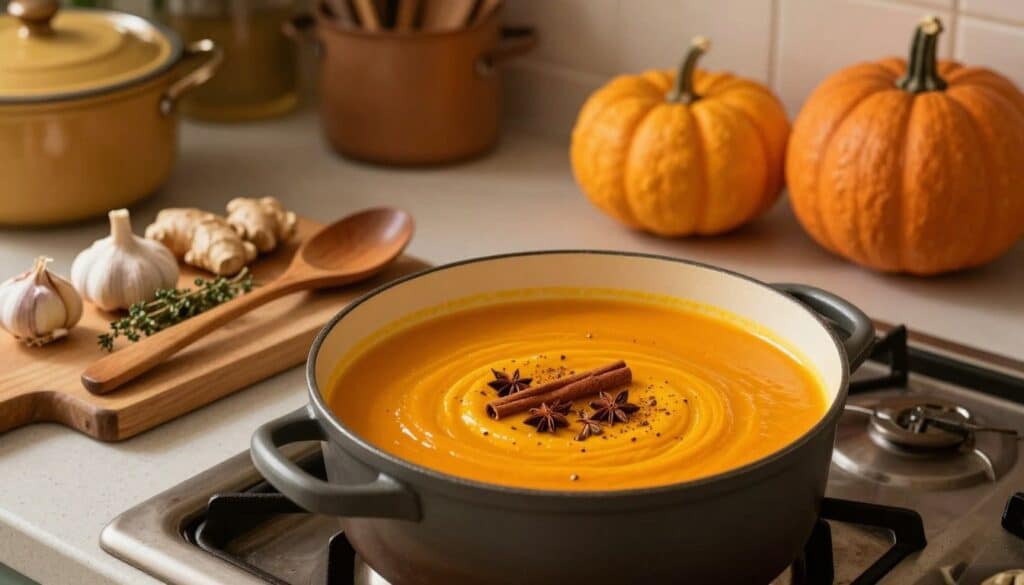
This easy pumpkin soup recipe turns canned purée into a silky, warmly spiced fall dinner with a cream swirl. It suits a cozy weeknight dinner when you want something comforting without a long kitchen project. Canned pumpkin makes the soup simple, while warm spices and a creamy finish give each bowl a special touch.
You get a smooth, savory soup with gentle sweetness and a soft kick of spice. Make it for a quick dinner, then let everyone add their own swirl or crunchy topping. The result feels relaxed and inviting, whether you are eating by yourself or sharing a pot with family.
Key Takeaways
- Canned pumpkin purée keeps the soup easy to make.
- Warm spices balance its sweet, savory flavor.
- A thorough blend gives the soup its silky texture.
- Choose heavy cream or coconut milk for the finish.
- Roasted pumpkin seeds add a crunchy topping.
Settle in with a bowl that brings fall comfort to an ordinary weeknight.
How Does This Easy Pumpkin Soup Recipe Fit Your Schedule?
From pantry ingredients to a cozy meal, this recipe fits into about 25 minutes. Canned pumpkin purée keeps the method weeknight-friendly, and the short cook time leaves room for an easy side. Silky texture, warm spices, and a creamy finish give this pumpkin soup recipe a best-ever feel without claiming a contest-worthy crown.
Prep takes 10 minutes, and cooking takes 15 minutes. You can measure ingredients and dice the onion before heating the pot. Then sauté, simmer, blend, and finish the soup in one cooking session.
| Stage | Time | What happens |
|---|---|---|
| Prep | 10 minutes | Measure ingredients and dice the onion |
| Cook | 15 minutes | Sauté, simmer, blend, and finish |
| Total | About 25 minutes | Ready to serve |
That timing makes this an easy pumpkin soup recipe with canned pumpkin for a busy evening. You do not need to peel or cook a whole pumpkin before the soup can go on the table. The canned version also helps you get a steady, smooth base with less prep.
Plan on about 25 minutes from measuring the ingredients to serving the soup.
A recipe can feel special without asking you to spend all evening cooking. This one balances mellow pumpkin with savory aromatics and a little sweetness. Warm cinnamon and nutmeg bring fall flavor, while the cream gives the blended soup a soft, rich finish.
It works as a light meal with bread or as a first course before a larger dinner. The recipe makes enough for a small group, with room for a bowl or two to be filled generously. Plan on 4-6 servings when you choose it for dinner.

Easy Pumpkin Soup
Ingredients
- 1 tablespoon olive oil or butter
- 1 small onion diced
- 2 cloves garlic minced
- 1 teaspoon grated fresh ginger optional
- 2 cans pumpkin purée 15 oz / 425 g each (not pumpkin pie filling)
- 3 cups chicken or vegetable broth
- 1 tablespoon maple syrup or brown sugar
- 1/2 teaspoon ground cinnamon
- 1/4 teaspoon ground nutmeg
- Pinch cayenne pepper optional
- 1 teaspoon salt and 1/2 teaspoon black pepper plus more to taste
- 1/2 cup heavy cream plus more for swirling (or coconut milk)
- Roasted pumpkin seeds pepitas, for serving
Instructions
- Heat the olive oil in a large pot over medium heat. Cook the onion for 4–5 minutes until soft, then add the garlic and ginger and cook 30 seconds more.
- Stir in the pumpkin purée, broth, maple syrup, cinnamon, nutmeg, cayenne, salt and pepper.
- Bring to a gentle simmer and cook for 10–12 minutes, stirring occasionally.
- Blend the soup with an immersion blender until completely silky (or blend carefully in batches).
- Stir in the cream and warm through for 2 minutes without boiling. Taste and adjust salt, pepper and sweetness.
- Serve hot with a swirl of cream and a sprinkle of roasted pumpkin seeds.
Ingredients for This Easy Pumpkin Soup
For this batch, set out two cans of plain pumpkin purée and the measured aromatics, broth, seasonings, and cream. Plain canned pumpkin gives you a ready-to-use base, while onion, garlic, and ginger build flavor around it. This pantry-friendly recipe has more than a few ingredients, but each one has a clear job.
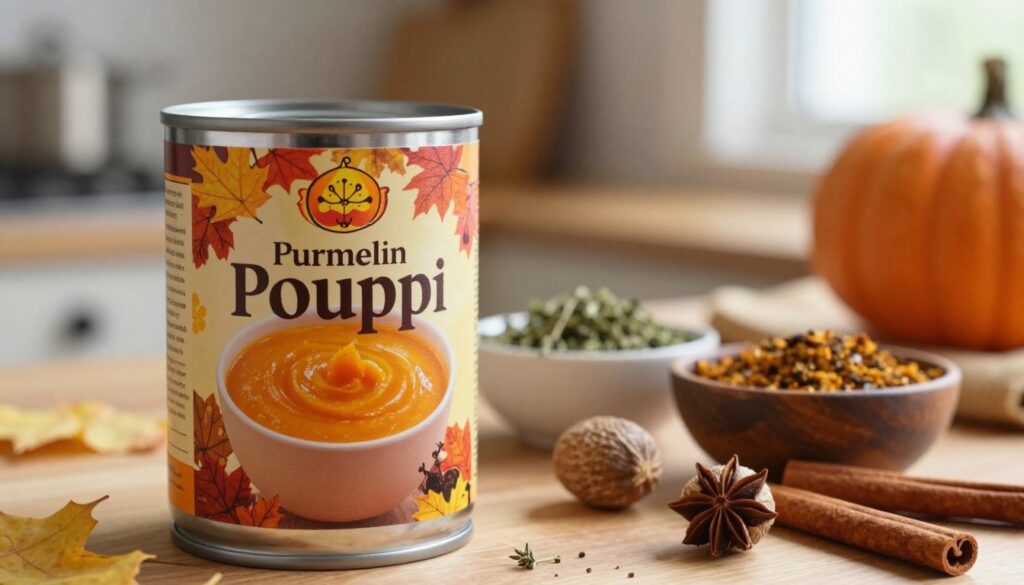
Use pumpkin purée, not pumpkin pie filling. Pie filling is sweetened and spiced, so it can throw off the soup’s savory balance. Check the can label for plain pumpkin before you add it to the pot.
Full Ingredients for This Batch
Gather these ingredients before you begin. The options let you use what you have without changing the recipe’s order or flavor base.
- 1 tablespoon olive oil or butter
- 1 small onion, diced
- 2 cloves garlic, minced
- 1 teaspoon grated fresh ginger, optional
- 2 cans (15 oz / 425 g each) pumpkin purée, not pumpkin pie filling
- 3 cups chicken or vegetable broth
- 1 tablespoon maple syrup or brown sugar
- 1/2 teaspoon ground cinnamon
- 1/4 teaspoon ground nutmeg
- Pinch of cayenne pepper, optional
- 1 teaspoon salt and 1/2 teaspoon black pepper, plus more to taste
- 1/2 cup heavy cream, plus more for swirling, or coconut milk
- Roasted pumpkin seeds (pepitas), for serving
Canned Pumpkin Versus Fresh Purée
You can use cooked, puréed fresh pumpkin, but canned pumpkin purée is the direct shortcut for this version. One 15-ounce can contains about 2 cups, so the two cans in this recipe provide a measured amount without extra cooking. Fresh pumpkin can vary in moisture and texture, which may change how thick the soup feels.
When you buy canned pumpkin, choose a can labeled pumpkin purée or plain pumpkin. Do not reach for pumpkin pie filling, even if the cans look similar on the shelf. The plain version leaves you in control of the soup’s salt, sweetness, and spices.
What a Shorter Ingredient List Leaves Out
A three-ingredient pumpkin soup can use pumpkin purée, broth, and cream. A four-ingredient version can add onion to that combination. Those pared-down options can make a simple soup, though they will not have the same layered taste.
This measured recipe adds garlic, optional ginger, a sweetener, cinnamon, nutmeg, cayenne, salt, and pepper. Each addition helps round out the pumpkin’s mild flavor. It remains pantry-friendly, but it is not a four-ingredient recipe.
Onion and salt matter more than their small amounts might suggest. Onion gives the base a savory note, while salt helps the pumpkin and spices taste clear rather than flat. Check the can label for plain pumpkin purée before you begin.
Step-by-Step Instructions
Heat the olive oil in a large pot over medium heat before adding the diced onion. The onion softens in the warm oil, then garlic and ginger bring a fragrant base to the soup. Start with the oil so the first cooking step follows the right order.
Cook the onion for 4-5 minutes, then cook the garlic and ginger for 30 seconds. Keep the pot over medium heat and stir as the aromatics cook. The short garlic step helps it release flavor without taking over the pumpkin.
Heat the Oil Before Softening the Onion
Follow these six steps in order. Keep a spoon nearby so you can stir the soup as it simmers and blends.
- Heat the olive oil in a large pot over medium heat. Add the diced onion and cook for 4-5 minutes, until soft. Add the garlic and ginger, if using, and cook for 30 seconds more.
- Stir in the pumpkin purée, broth, maple syrup, cinnamon, nutmeg, cayenne, salt, and pepper. Mix until the pumpkin blends into the broth.
- Bring the soup to a gentle simmer. Cook for 10-12 minutes, stirring occasionally so the bottom does not catch.
- Blend until completely silky with an immersion blender, or blend carefully in batches.
Simmer, Blend, and Finish
After blending, keep the pot on the stove for the final steps. The soup should look smooth and even, with no visible pumpkin lumps. You can pause here to set out bowls or toast bread, as long as you keep an eye on the pot.
- Stir in the cream and warm the soup for 2 minutes without boiling. Taste, then adjust the salt, pepper, and sweetness.
- Serve hot with a swirl of cream and roasted pumpkin seeds (pepitas).
The gentle simmer gives the pumpkin time to take on the flavor of the onion, garlic, broth, and spices. Stirring now and then also helps the thick purée move through the pot. If the soup sits while you prepare sides, a quick stir brings the smooth mixture together again.
Use an immersion blender directly in the pot, or transfer the soup in batches if you prefer a countertop blender. Keep the finish simple so the warm pumpkin flavor stays in front. Taste the finished soup and adjust its salt, pepper, and sweetness before serving.
Tips for the Silkiest Texture
A thorough blend is the key to turning the pumpkin and broth into a silky soup. Move an immersion blender through the whole pot, including the edges and bottom, until no lumps remain. Blend all the way through rather than stopping as soon as the surface looks smooth.
For a countertop blender, let hot soup cool slightly and blend carefully in batches. Hot liquid can build pressure and blow the lid off. Fill the blender only partway, hold the lid firmly with a towel, and keep your face away from the opening.
An immersion blender is often the easiest choice because you can puree the soup in its cooking pot. Run it slowly through the center, then sweep around the sides. Pause to check for pieces of onion or pockets of thick pumpkin before you stop.
Common mistakes in making pumpkin soup include using pumpkin pie filling instead of plain purée. Pie filling brings sugar and spices that can make the finished soup taste too sweet. It can also make it hard to adjust the seasoning to your liking.
Another mistake is blending hot soup carelessly in a countertop blender. The trapped steam needs room to escape, so a full, tightly sealed blender can turn a quick task into a mess. Cooling the soup a little first and working in batches helps you blend with more control.
After adding cream, keep the soup at a gentle heat rather than letting it boil. Boiling can split the cream, leaving the surface less smooth. Warm the finished pot slowly, and stir as needed to keep the texture even.
A thick soup can cling to the blender bell or jar, so scrape it back into the pot with a spoon. Do not add extra liquid just because the soup looks dense before blending. The broth and pumpkin come together more evenly once the whole pot has been pureed.
Use plain pumpkin purée, blend carefully, and keep the cream below a boil. Those small choices prevent the most common texture problems without adding extra work. After the cream goes in, keep the pot below a boil.
Easy Pumpkin Soup Variations
Keep the same pumpkin-and-broth base, then choose a creamy finish or a little more heat. Coconut milk replaces the heavy cream in the listed amount, while optional ginger and cayenne build a warmer flavor. Small changes keep the soup recognizable while letting you tune each bowl to your taste.
Use the same amount of coconut milk as heavy cream for a dairy-free finish. You can also add more coconut milk to the serving swirl. For extra spice, add the listed ginger or cayenne, then taste before adding more.
Coconut Milk for a Dairy-Free Finish
Use coconut milk in place of the recipe’s 1/2 cup of heavy cream. Stir it in at the same point in the method, then warm the soup through. A little extra coconut milk works as a swirl in each bowl.
The coconut flavor gives the pumpkin a gentle change in character, while the soup stays creamy. Choose this option when you want a dairy-free finish or simply prefer coconut milk. Keep the bowl topping in line with that choice if you want the whole serving dairy-free.
Extra Spice for More Warmth
Fresh ginger and cayenne are both optional in the base recipe, so they offer an easy way to shift the flavor. Ginger brings a fresh, warm note, while cayenne adds heat. You can also adjust the cinnamon and nutmeg gradually to taste.
Make small changes, then taste the soup before you add another pinch. That way, the pumpkin stays at the center instead of disappearing behind the spices. The table shows what each simple variation changes.
| Version | Change | Flavor or finish |
|---|---|---|
| Classic | Use heavy cream | Rich, creamy finish |
| Coconut milk | Replace heavy cream with coconut milk in the recipe’s listed amount | Dairy-free creamy finish |
| Extra spice | Add optional ginger and a pinch of cayenne, then taste | Warmer flavor with adjustable heat |
Keep the other ingredients steady when you try one change for the first time. This makes it easier to notice how coconut milk or a little extra spice shifts the flavor. Taste before adding more cayenne, since a small amount can noticeably increase the heat.
What to Serve with Pumpkin Soup
A bowl of pumpkin soup pairs naturally with something crisp or sturdy for dipping. Crusty bread, biscuits, or a grilled cheese sandwich can turn it into a cozy meal, while a salad keeps the table lighter. One good side is often all you need beside the smooth soup.
Choose a hearty side if the soup is the main part of dinner. A fall salad or a serving of farro gives you a different texture beside the creamy bowl. For a casual night, pita pizza makes the meal feel easy and fun.
Pair It with Bread or a Simple Meal
Pick a pairing that suits your appetite and the time you have. These ideas work for lunch, a starter, or a simple dinner:
- Serve crusty bread or biscuits for dipping.
- Add grilled cheese for a cozy lunch or dinner.
- Offer goat-cheese toast or crackers with smoked Gouda.
- Pair the soup with a fall salad.
- Serve farro as a heartier side.
- Add pita pizza for a casual meal.
For another cozy dinner idea, try these slow cooker swamp potatoes with bread or cornbread. That hearty dish takes longer to cook, so it suits a day when you can let dinner simmer. For a quick meal, a slice of toast or a small salad is easier to manage.
Add a Topping for Contrast
An extra cream swirl adds a soft, creamy finish, while roasted pumpkin seeds (pepitas) bring crunch. Add the seeds just before serving so they stay crisp. A few on each bowl give you a clear contrast against the smooth soup.
You can serve the soup as a first course for a fall dinner or make it the center of a simple meal with a side. Set out toppings separately if everyone wants a different finish. Choose one hearty side when serving the soup as the main part of dinner.
Storage and Freezing for Pumpkin Soup
Cool leftover soup and transfer it to an airtight container for storage. Prompt chilling helps you put dinner away safely, so refrigerate cooked soup within 2 hours. Keep toppings out of the stored portion and add them to fresh bowls when you serve it again.
Refrigerate pumpkin soup for up to 4 days or freeze it for up to 3 months. Use a freezer-safe container for frozen portions and leave room at the top for expansion. A smaller container can make it easier to thaw only what you plan to eat.
Divide the soup into portions before freezing if you expect to use it on different days. Let each portion cool before you seal the container. This gives you a practical serving size and avoids thawing a whole batch for one meal.
Freeze the soup without the cream swirl or roasted pumpkin seeds on top. Those bowl toppings are best added when you serve the soup, rather than stored with the whole batch. Write the contents and date on each container so it is easy to spot in the freezer.
For refrigerator storage, choose a container with a tight lid to help protect the soup from spills and other food smells. Place it where you can see it when you open the fridge. That small habit can help you use the leftovers within their storage window.
Leave a little headroom in each freezer container, since soup expands as it freezes. Avoid filling the container right to the lid. A clear space at the top helps prevent a cracked container or a messy freezer shelf.
If you plan to freeze several portions, label each one before putting it away. The label helps you keep track of when you stored the soup. Mark the freezer container with the date so you can use the stored portion within 3 months.
Reheating Pumpkin Soup
Reheat leftovers gently so the soup warms evenly without scorching. On the stove, use medium-low heat and stir occasionally as the pumpkin soup warms. Slow warming gives you more control over a thick soup than a blast of high heat.
For an individual microwave portion, heat in 30-60 second intervals and stir between intervals. The pauses help the soup warm more evenly, since the edges can heat faster than the center. Use a microwave-safe bowl with enough room to stir without spilling.
Warm the soup over medium-low heat, stirring now and then to prevent scorching.
Refrigerated soup may thicken as it sits. Add water a little at a time while stirring until the soup loosens to the texture you like. Start with a small splash, since you can always add more as the pot warms.
Thaw frozen portions in the refrigerator before reheating. Once thawed, warm the soup on the stove or in the microwave using the same gentle approach. A separated or thick-looking portion often comes together again with steady stirring.
For stovetop reheating, use a pot wide enough to stir without splashing. Stir from the bottom and around the edges as the soup heats. If the soup feels too thick, add a little water and keep stirring until it loosens.
When using the microwave, pause between intervals to stir the soup well. That gives you a chance to check the center and edges before heating again. Use a shorter interval if the portion is already warm.
Do not add cream or milk automatically when reheating. First check how the soup looks after stirring and adding water if needed. Stir the soup well and check its consistency before ladling it into a bowl.
Conclusion
A warm, creamy bowl can make an ordinary evening feel like fall. Canned pumpkin purée keeps the work simple, while the smooth finish makes the meal feel comforting without a long list of steps. It is a useful recipe to keep in mind when you want a cozy fall meal or weeknight dinner.
Make the soup with heavy cream for a rich finish, or choose coconut milk when that better suits your table. Add a side that fits the evening, then save any extra portions for another meal. Set out the ingredients, heat the oil first, and make a pot for dinner.